What Solid Hardwood Actually Means
What Solid Hardwood Actually Means
“Solid wood” gets used a lot. It doesn’t always mean what people think it does.
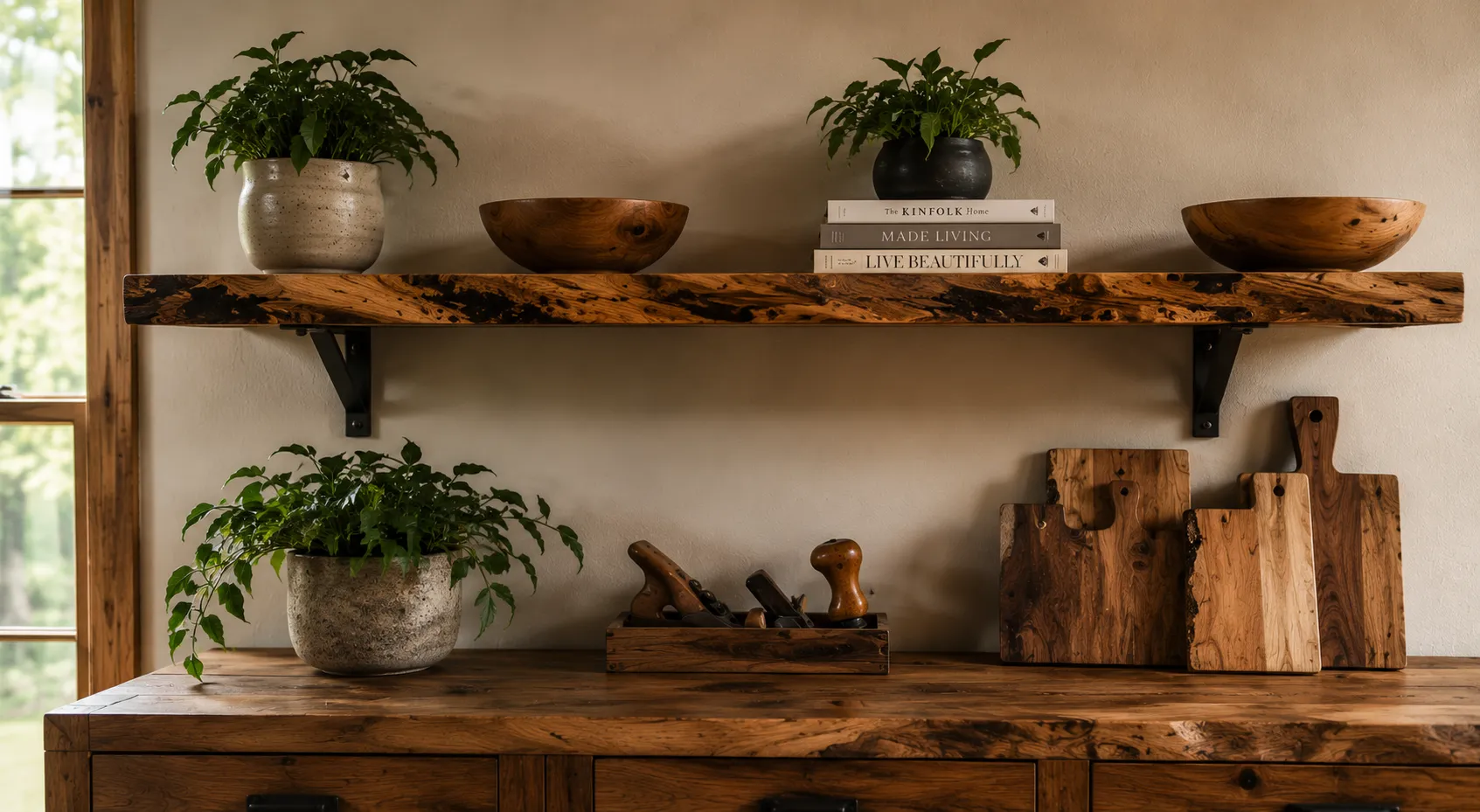
At its simplest, solid hardwood means the piece is made from real boards cut from a tree. Not a thin layer of wood glued over something else. Not a printed surface. Not a composite trying to imitate the look.
Just wood.
That matters more than it might seem.
Solid wood has weight to it. It holds fasteners differently. It can be shaped, sanded, and refinished without exposing something artificial underneath. When it wears, it still looks like wood because it is.
That doesn’t mean it’s perfect.
Wood moves. It expands and contracts with humidity. Grain patterns vary. Color shifts from board to board. Knots show up where they want to. Those aren’t defects, they’re characteristics of the material.
Engineered products were created to avoid those variables. They stay flat. They look consistent. They’re easier to produce in large quantities.
But they trade away something in the process.
Once a veneer is damaged, there’s not much underneath to work with. Once a composite panel breaks down, it’s done. There’s no real way to bring it back.
Solid hardwood gives you options.
It can be repaired. It can be refinished. It can take on wear without losing its integrity. Over time, it develops a surface that reflects how it’s been used, not something that deteriorates underneath a thin layer.
That’s the difference.
Solid hardwood isn’t about perfection. It’s about longevity and the ability to hold up under real use.
It’s a material that changes, but doesn’t give out.
We build solid wood
furniture and functional pieces designed for everyday use. Small-batch craftsmanship,
natural materials, and straightforward construction built to last.
Useful Links
Latest Products
Contact Us
Have questions or need help?
Reach out to us, we would love to hear from you.
- (919) 896-5293
- [email protected]
- Clayton, NC
© 2026 Unique Finds. All Rights reserved.