Why “One of a Kind” Actually Matters
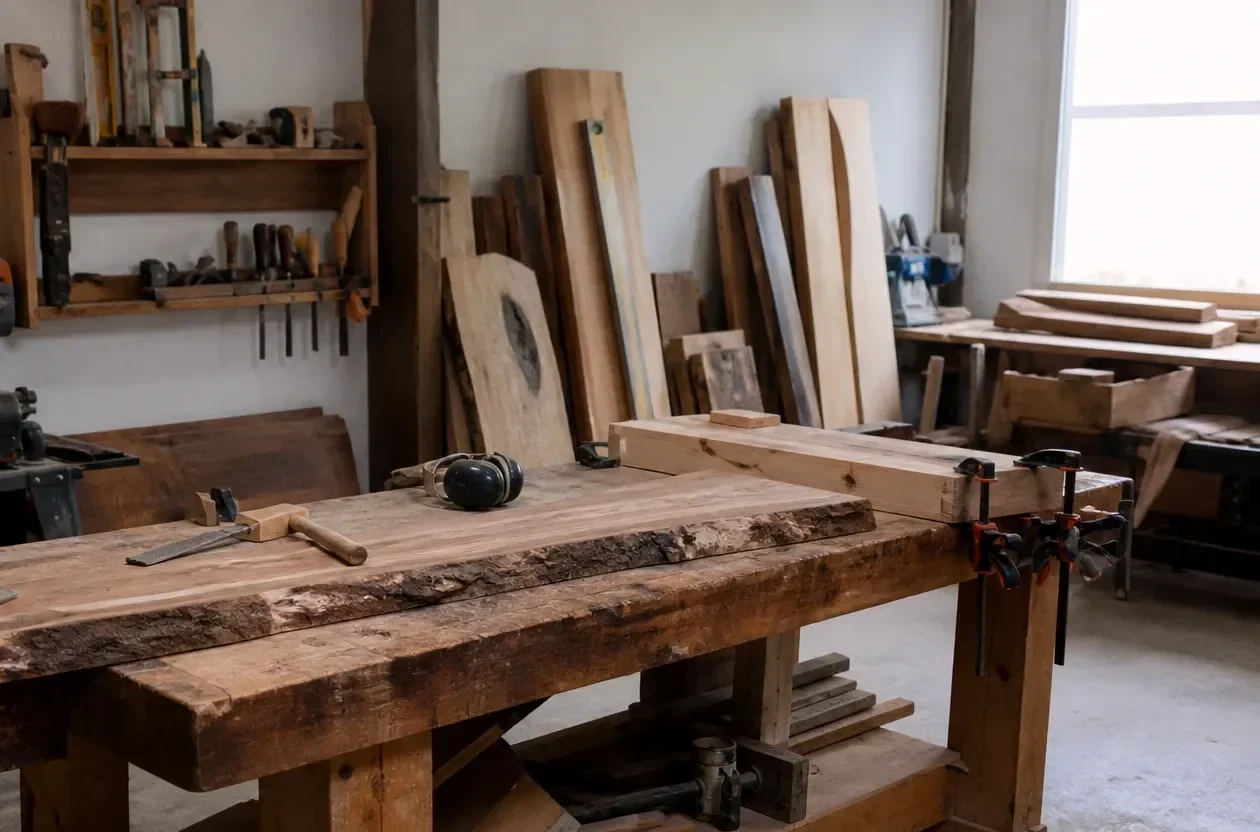
Why “One of a Kind” Actually Matters
“One of a kind” gets used a lot. Sometimes it’s just a way to make something sound more interesting than it is.
With real wood, it’s not a label. It’s just how the material works.
No two boards are the same. Grain patterns shift. Color varies. Growth rings tell a different story in each piece. Even boards cut from the same tree won’t match exactly.
That carries through to the finished product.
Two shelves built to the same dimensions will still look different. One might have more movement in the grain. Another might be more uniform. One might carry a knot or a check that the other doesn’t.
That variation is what gives the piece its identity.
Mass production works by removing that variation. Standardizing materials. Controlling appearance. Making everything match so it can be reproduced at scale.
There’s a place for that.
But when you work with solid wood in small batches, you don’t eliminate those differences. You work with them.
That means each piece ends up being specific to itself.
It also means the piece you get is the piece you live with. Not something that can be swapped out for an identical replacement later.
For some people, that’s a drawback.
For others, it’s the reason to choose it in the first place.
We build solid wood
furniture and functional pieces designed for everyday use. Small-batch craftsmanship,
natural materials, and straightforward construction built to last.
Useful Links
Latest Products
Contact Us
Have questions or need help?
Reach out to us, we would love to hear from you.
- (919) 896-5293
- [email protected]
- Clayton, NC
© 2026 Unique Finds. All Rights reserved.